Machine learning is often presented as domain-agnostic: a set of universal algorithms applicable wherever data exists. In practice, however, domain knowledge is a decisive factor in determining whether a machine learning system is merely functional or genuinely useful.
At a conceptual level, machine learning algorithms optimize mathematical objectives defined over data. Yet the formulation of these objectives—what is measured, constrained, and prioritized—is inherently domain-dependent. In medical diagnostics, false negatives may be catastrophic; in recommender systems, diversity may matter more than precision; in engineering design, physical feasibility imposes hard constraints that no amount of data can override.
Consider healthcare as an illustrative domain. Medical machine learning models must contend with heterogeneous data sources, limited labeled samples, and ethical imperatives surrounding explainability. A highly accurate model that cannot justify its predictions may be unacceptable in clinical settings. Consequently, techniques such as interpretable models, uncertainty quantification, and causal inference become as important as raw predictive power.
In contrast, finance emphasizes risk sensitivity and robustness. Models are evaluated not only on expected performance, but on tail behavior under extreme conditions. Overfitting, which may be tolerable in consumer applications, becomes unacceptable when financial stability is at stake. As a result, financial ML often integrates statistical learning with economic theory and stress testing.
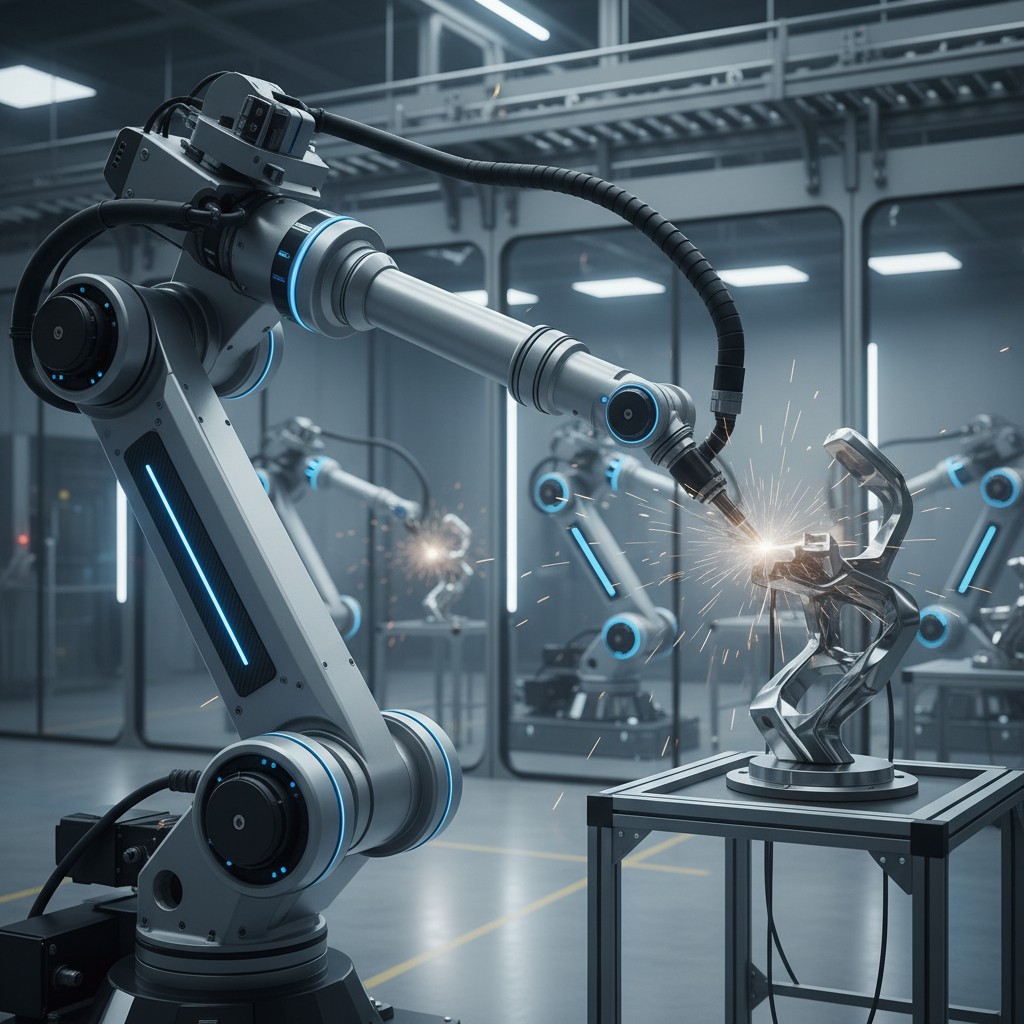
Engineering and physical sciences introduce yet another paradigm: physics-informed learning. Here, machine learning models are constrained by conservation laws, constitutive relations, or governing equations. Rather than replacing theory, ML augments it—accelerating simulations, filling modeling gaps, or enabling real-time control where classical methods are computationally prohibitive.
Education, the domain most directly relevant to AI Scholarium, presents a different challenge. Learning analytics and adaptive tutoring systems must balance personalization with pedagogical soundness. Optimizing short-term engagement may undermine long-term learning outcomes. Effective educational AI therefore requires grounding in cognitive science, curriculum design, and assessment theory.
Across these domains, a common lesson emerges: machine learning does not eliminate expertise—it reconfigures it. Domain experts are no longer solely responsible for manual decision-making, but for shaping data pipelines, defining objectives, validating outputs, and interpreting results. Conversely, AI practitioners must move beyond generic workflows to engage deeply with the contexts in which their models operate.
AI Scholarium embraces this domain-sensitive perspective. Its educational philosophy rejects one-size-fits-all tutorials in favor of field-aware AI literacy. Learners are encouraged to ask not only “How does the model work?” but “Why is this model appropriate here?” and “What assumptions does this deployment encode?”
As AI adoption accelerates, the most valuable practitioners will not be those who merely train models, but those who bridge computational intelligence with domain reasoning. Machine learning, in this sense, becomes less about automation and more about augmented understanding.