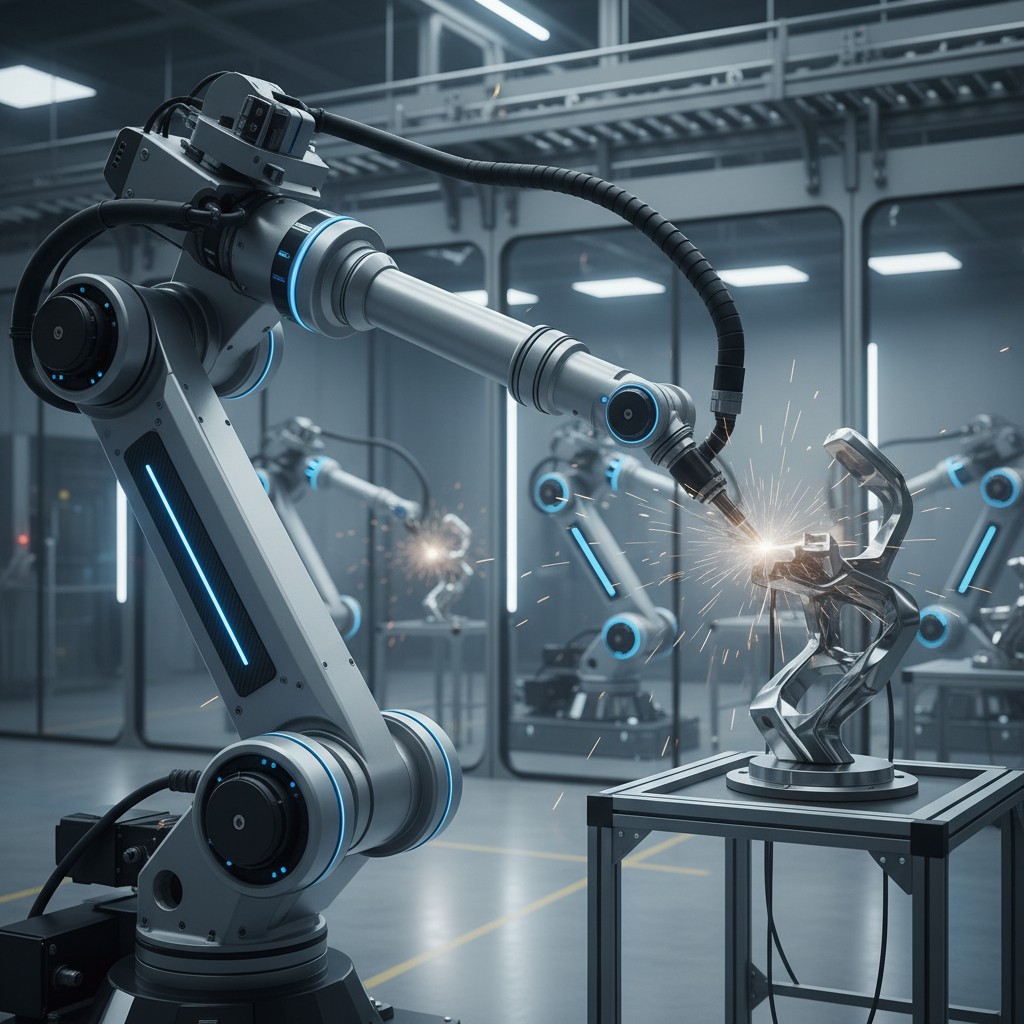
Engineering With AI: The New Frontier of Intelligent Design, Optimisation, and Innovation
1. Introduction: The Age of Augmented Engineering
Engineering has always evolved in cycles—steam, electricity, computing, automation—and now, the age of Artificial Intelligence (AI) marks a new transformation. Unlike past transitions, AI is not merely a tool but a cognitive layer that deepens an engineer’s capacity to model, predict, design, and optimise complex systems. It augments human insight, turning engineering workflows into adaptive, data-driven, continuously improving cycles.
From smart materials to predictive maintenance, from computational fluid dynamics (CFD) enhanced by neural networks to automated structural analysis, the engineering profession is shifting from deterministic modelling toward hybrid computational intelligence—where physics-based methods and learning-based methods coexist.
This article explores, in depth, how AI is transforming engineering practice today, what skills modern engineers need, and how professionals can strategically re-train for this epochal shift.
2. AI as a Cognitive Amplifier in Classical Engineering Disciplines
2.1 Mechanical Engineering
Mechanical engineering is experiencing the most rapid AI augmentation due to the discipline’s reliance on simulation, optimisation, and control. AI-enhanced engineering is enabling:
-
CFD acceleration via surrogate models
Neural networks replace expensive RANS or LES simulation cycles, reducing weeks of simulation time to seconds. -
Digital twins for rotating machinery
Sensors feed into AI models that continuously estimate states, detect anomalies, and forecast failures. -
Reinforcement learning (RL) for control systems
AI agents optimise HVAC systems, turbomachinery, robotics actuation, and autonomous navigation. -
Materials discovery
AI predicts fatigue, creep, phase transitions, and microstructure evolution far faster than physical experimentation.
Mechanical engineers are moving toward AI-augmented computational design, where simulation fidelity combines with learning-based predictive insight.
2.2 Civil & Structural Engineering
Civil infrastructure is increasingly instrumented, producing continuous streams of data. AI elevates civil engineering by enabling:
-
Structural health monitoring (SHM) with vibration, strain, and displacement sensors interpreted through machine learning.
-
AI-driven seismic risk analysis using thousands of synthetic earthquake scenarios.
-
Automated defect detection in bridges, tunnels, facades using computer vision.
-
Smart traffic systems using reinforcement learning for congestion reduction.
Traditional infrastructure is transforming into self-aware, self-diagnosing systems.
2.3 Electrical & Electronic Engineering
AI is now intertwined with electronics, power systems, and embedded systems:
-
Smart grids adapt in real time to demand, supply variation, and renewable intermittency.
-
AI-based signal processing enhances noise reduction, pattern detection, and anomaly identification.
-
Neural network accelerators are embedded directly into hardware (TPUs, NPUs, edge-AI chips).
-
Predictive maintenance for transformers, storage systems, and power components.
Electrical engineers are increasingly required to master both circuitry and computational intelligence.
2.4 Chemical & Process Engineering
Chemical engineering benefits from AI’s ability to model complex, nonlinear phenomena:
-
Process optimisation via supervised learning
Plants optimise set-points and reduce energy consumption. -
AI-guided reaction modeling
Neural networks learn reaction kinetics and mass-transfer characteristics from limited data. -
Predictive emission monitoring
AI detects early deviations in effluent streams, reducing environmental risk. -
Soft sensors
AI estimates chemical states that cannot be directly measured.
Hybrid AI-physics models are becoming standard in advanced process industries.
2.5 Aerospace & Automotive Engineering
Complexity, safety requirements, and multivariate dynamics make these sectors ideal for AI:
-
Flight path optimisation validated against millions of off-nominal scenarios.
-
AI-enhanced aerodynamics for wings, rotors, and propulsion systems.
-
EV battery life prediction using thermal, mechanical, and electrochemical ML models.
-
Autonomous driving combining computer vision, LiDAR fusion, and RL-based decision systems.
Aerospace and automotive engineers are now expected to understand AI pipelines and validation workflows.
3. How AI Reinvents the Engineering Workflow
AI does not simply automate tasks; it restructures engineering logic.
3.1 From Deterministic Modelling → Hybrid Intelligence
Classical engineering relies on:
-
Governing equations
-
Boundary conditions
-
Constitutive relations
-
Analytical approximations
AI brings:
-
Pattern learning
-
Data-driven inference
-
Surrogate modelling
-
Uncertainty quantification
The future is hybrid modelling, where physics-based solvers anchor the system while AI fills gaps, accelerates iterations, and learns unmodelled behaviours.
3.2 From Static Design → Generative Design
Generative AI enables:
-
Automatic 3D geometry creation
-
Multi-objective optimisation
-
Shape, topology, and lattice exploration
-
Performance-driven iteration
Tools like gradient-based optimisation and generative neural networks allow engineers to “co-create” with AI. Instead of manually sketching and iterating, engineers supervise an algorithm that proposes thousands of valid, optimised solutions.
3.3 From Scheduled Maintenance → Predictive Maintenance
AI transforms maintenance into a continuous, predictive discipline:
-
Sensor fusion models detect anomalies far earlier than thresholds.
-
AI learns vibration signatures, thermal behaviours, and electrical drift patterns.
-
RL chooses maintenance intervals that balance uptime and risk.
This eliminates unnecessary shutdowns and prevents catastrophic failure.
3.4 From Testing → Virtual Experimentation
AI enables:
-
Synthetic data
-
Digital replicas
-
Virtual stress, fatigue, and failure models
-
Simulation-to-reality transfer learning
Engineering validation is shifting from physical-first to simulation-first, reducing cost and accelerating development cycles.
4. Essential Skills for Engineers in the AI Era
Engineering professionals need a blend of traditional foundations and computational intelligence.
4.1 Core Engineering Foundations
AI does not replace engineering fundamentals; it amplifies them. Engineers still require:
-
Fluid mechanics
-
Thermodynamics
-
Strength of materials
-
Control theory
-
Electronics & circuits
-
Manufacturing principles
These remain non-negotiable.
4.2 Computational & AI Literacy
Modern engineers must also be proficient in:
Programming:
-
Python
-
MATLAB
-
C/C++ for embedded systems
AI Tools:
-
TensorFlow, PyTorch (deep learning)
-
Scikit-learn (ML)
-
HuggingFace (NLP)
Data Skills:
-
Data cleaning
-
Feature engineering
-
Statistical analysis
-
Visualisation
4.3 Simulation & Modelling Integration
The AI-powered engineer must integrate:
-
CFD + neural networks
-
FEM + surrogate models
-
Process simulation + reinforcement learning
-
Control engineering + machine learning
This creates a more adaptive engineering workflow.
4.4 Systems Thinking & Interdisciplinary Design
Engineers must adopt:
-
Multi-domain thinking
-
Learning from data
-
Probabilistic reasoning
-
Uncertainty management
-
Ethics & responsible AI
Modern engineering is no longer siloed—it is systems-level intelligence.
5. Real-World Use Cases Transforming Modern Engineering
5.1 Smart Buildings & HVAC Intelligence
AI optimises energy consumption by:
-
Learning occupancy patterns
-
Predicting load
-
Adjusting ventilation and temperature dynamically
Results:
-
20–40% energy savings
-
Improved occupant comfort
5.2 CFD Acceleration Through Neural Surrogates
AI replaces expensive CFD iterations with learned approximations:
-
10,000× faster
-
Enables real-time fluid predictions
-
Supports generative aerodynamic design
Used in:
-
F1 aerodynamics
-
Drone propeller optimisation
-
Cooling systems engineering
5.3 Digital Twins for Manufacturing
Manufacturing plants create virtual replicas that continuously update from sensor data. AI enables:
-
Yield optimisation
-
Process tuning
-
Early fault detection
-
Automated quality control
5.4 Predictive Materials Engineering
AI models can predict:
-
Thermal conductivity
-
Mechanical strength
-
Phase transition behaviour
Applications in:
-
Composite materials
-
Phase-change materials (PCM)
-
Aerospace alloys
5.5 Robotics & Autonomous Systems
AI elevates robotics through:
-
Visual perception
-
Sensor fusion
-
Motion planning
-
Learn-as-you-operate capability
Industrial robots become more flexible than ever before.
6. The Future Engineer: Hybrid, Augmented, and Algorithmically Fluent
The engineer of the future will not be replaced by AI.
However, the engineer who does not understand AI will be replaced by one who does.
Future engineering roles merge:
-
Domain knowledge
-
AI application
-
Computational modelling
-
Automated optimisation
-
Data-driven decision making
This hybrid professional becomes a systems architect, not just a problem solver.
7. Build Your AI-Augmented Engineering Career with AI Scholarium
AI Scholarium was designed exactly for this growing need:
Engineers who must become AI-fluent without wasting years in formal retraining programs.
Our platform offers:
Machine Learning for Engineers
Hands-on modules covering:
-
Regression
-
Clustering
-
Decision boundaries
-
Evaluation metrics
-
Real computational visualizers & sandboxes
Perfect for engineers transitioning to data-driven workflows.
Natural Language Processing (NLP) Tools
Learn how text is processed, analysed, and converted into actionable intelligence:
-
Tokenisation
-
Sentiment models
-
Text classification
-
Vector semantics
Deep Learning Playground
Experiment with:
-
Perceptrons
-
Neural network layers
-
Backpropagation
-
Activation functions
-
CNN concepts
All through browser-based simulators.
General AI Sandboxes
Intuitive tools for understanding AI behaviours:
-
Text generators
-
Rule-based chatbots
-
Toy classifiers
-
Interactive predictors
These help beginners build mental models before moving into heavier engineering applications.
8. Enrol Today — Take Your Engineering Career to the Next Level
If you want to prepare yourself for the future of engineering—
whether you are a mechanical, civil, electrical, chemical, or aerospace engineer—
AI fluency is no longer optional. It is essential.
AI Scholarium provides:
-
Self-paced courses
-
Fully interactive sandboxes
-
Engineer-focused content
-
No coding prerequisites for beginners
-
Real coding labs for technical learners
-
Professional learning pathways
Start your AI Engineering journey today:
https://aischolarium.com
Or go directly to the sandboxes:
https://aischolarium.com/code-sandboxes/
Engineers build the future.
AI is the new tool of creation.
Combine both—and you become unstoppable.